AutoLoad Day 2025: A new chapter for the logistics of fuel distribution terminals and bases.

AutoLoad Day 2025 was more than just an event. It was a celebration of a journey built over more than twenty years of practical experience in process, automation, technology, and consistent results across dozens of implementations. In a gathering that brought together clients, experts, and strategic partners, the day marked a synthesis of the most advanced aspects of automated logistics in the sector.

AutoLoad is a comprehensive and integrated solution dedicated to the automation and logistics management of fuel distribution terminals and depots. Its purpose is to expand handling capacity, maximize operational efficiency, prevent fraud and diversion through complete traceability, and improve operational safety. 

The platform offers real-time control of inventory and movement, reduces costs, connects systems, and centralizes critical information in a single flow. By serving some of the country's main terminals, AutoLoad has established itself as a tool that increases return on capital by reducing risks, eliminating bottlenecks, and raising the standard of logistical efficiency.
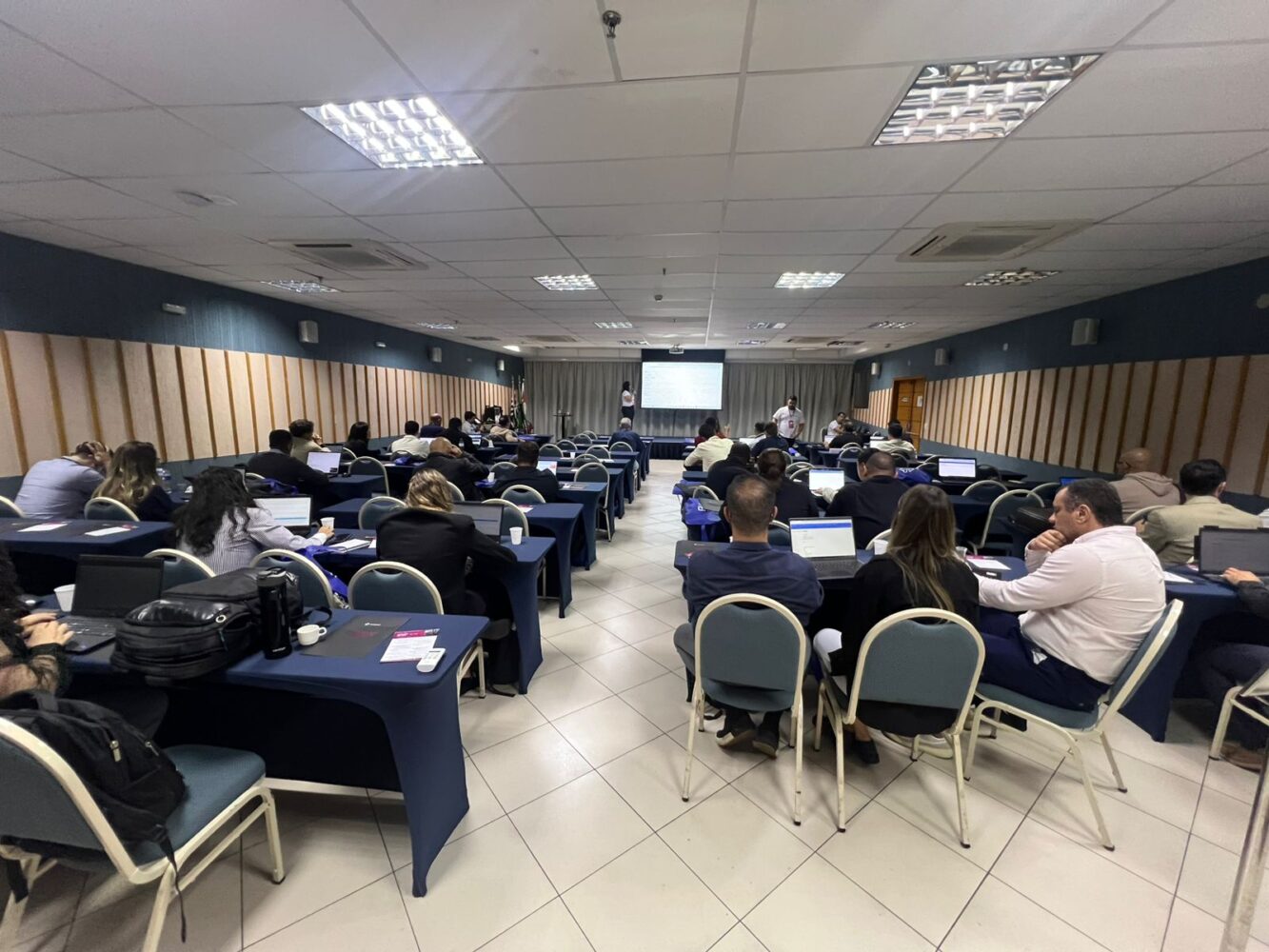
From the very first moments of the event, the atmosphere was one of integration and knowledge sharing. The program presented a complete overview of the evolution of AutoLoad and the current demands of terminals and bases. Following this, participants received a clear overview of automation applied to the field, including instrumentation and equipment that communicate directly with the system. 

Next, a comprehensive overview of the AutoLoad modules was presented, covering scheduling, queue control, access, loading and unloading operations, tank management, inventory, and the customer portal. The highlight of the experience was the practical sessions where professionals operated real-world simulations of terminal processes. This direct contact with the system reinforced how the platform integrates critical steps, eliminates rework, and enhances operational control.
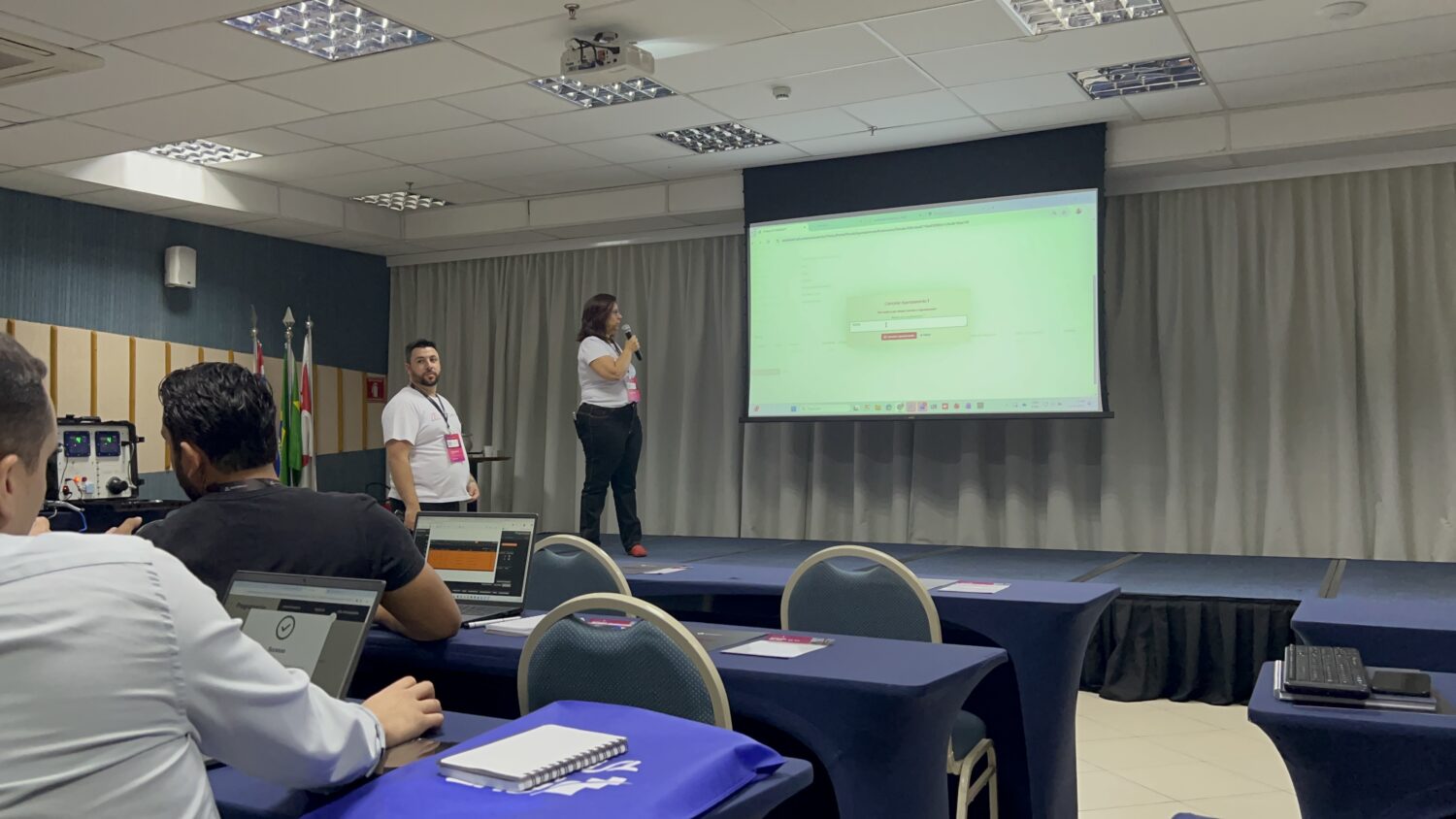
The afternoon was marked by discussions about intelligent document management with AutoChecker, a solution that unifies the validation and authentication of logistics documents and reduces regulatory and operational risks. 

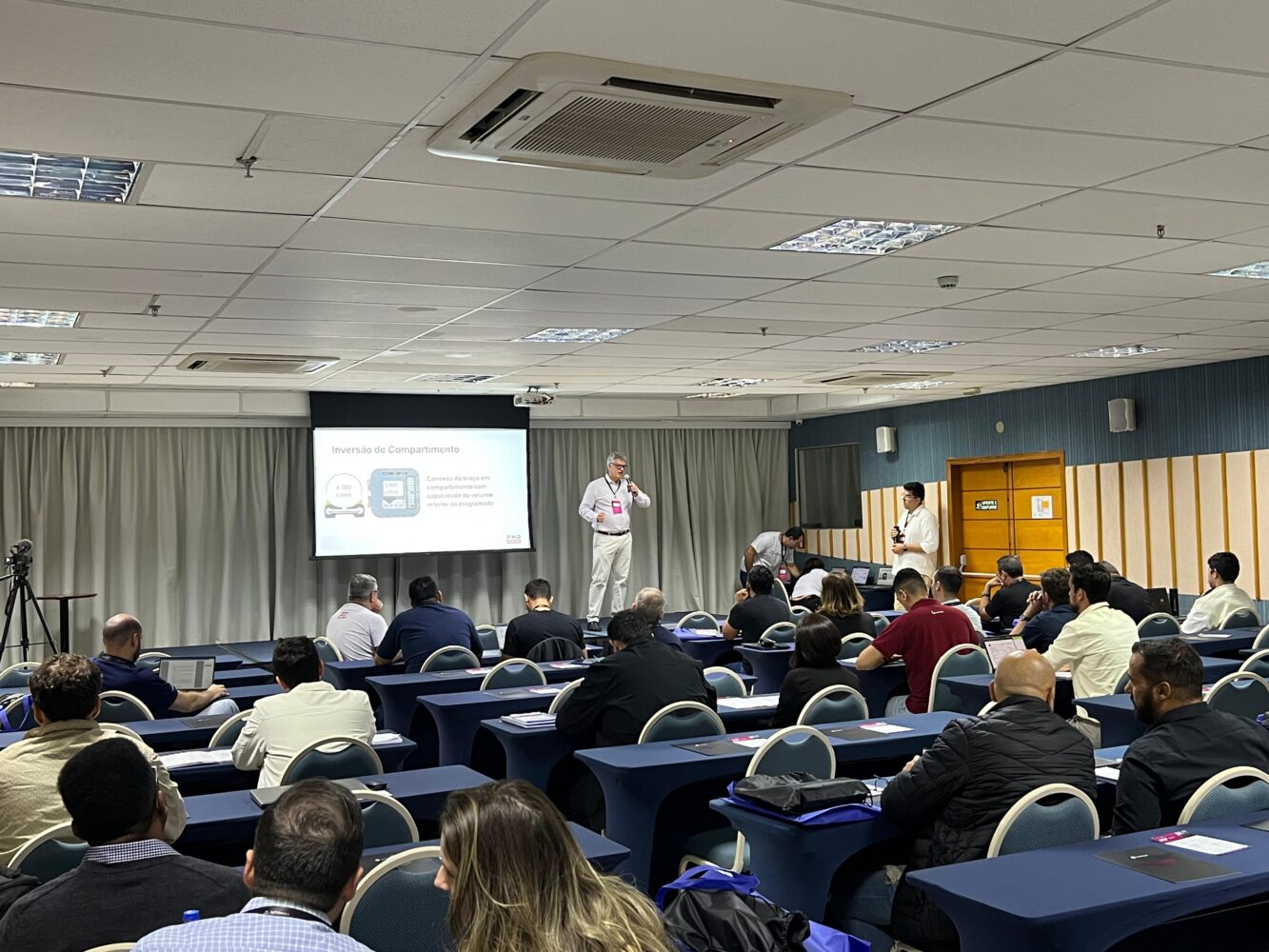
The event progressed to the presentation of the 2026 Roadmap, revealing the next evolution of the platform with AutoLoad Cloud, a cloud solution prepared for more connected and intelligent operations. The vision for the future includes artificial intelligence and autonomous agents capable of learning from plant behavior, anticipating demands, and supporting critical decisions in real time. 

As highlighted by the Business Director, Adriano Macário, "the future of AutoLoad is to be the digital brain of the logistics operation, integrating people, processes and data to transform information into intelligence and automation into a competitive advantage.".
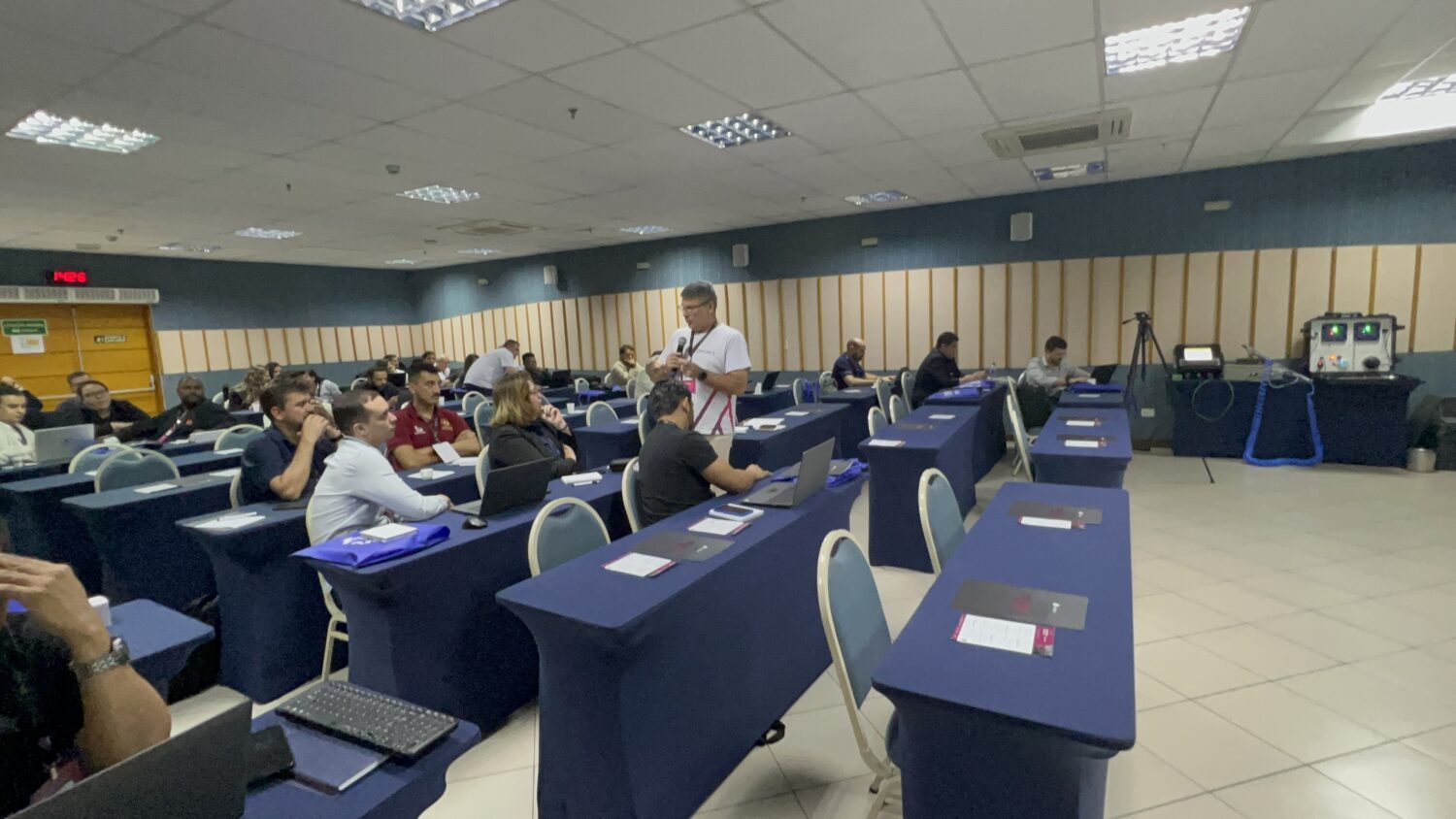
The AutoLoad Day event was made possible thanks to the essential support of PHD Master and TS Pro. These two partners were crucial in enriching the content, strengthening connections with the market, and ensuring a practical experience aligned with the real needs of fuel terminals and depots.

AutoLoad Day 2025 concluded by making it clear that the terminal and base station sector is experiencing a new cycle. More integrated, smarter, and safer. And AutoLoad, now evolving into AutoLoad Cloud, remains firmly established as the platform connected to this transformation.
Petrobras evaluates the contract with Automind at a level of excellence

The contract started in 2014 included Technical Assistance Services on board the Platforms, and Metrological Management carried out on land for the Measuring Systems of the P50, P52, P53, P54, P55, P62, P74 Platforms and just Metrological Management of the Measuring System of the FPSO-NIT platform.

The objective was to guarantee the integrity of fiscal, appropriation, operational and custody measurement systems, maintaining compliance with the requirements of the Technical Measurement Regulation approved in Joint Resolution ANP/INMETRO No. 01:2013. The services were performed in accordance with the requirements of ABNT NBR ISO 10012:2004 and ABNT NBR ISO/IEC 17025:2005.

In order to carry out calibration services for the instruments that make up the measurement system, Automind structured a Calibration Laboratory Accredited by the General Coordination of Accreditation of INMETRO (CGCRE), according to ABNT NBR ISO/IEC 17025 (Brazilian Calibration Network - RBC), able to carry out services in its facilities, in the client's facilities and in mobile installations.

“To carry out the contract, we invested in the development of the team, equipment, standardization of processes and implementation of the Management System, resources that had a direct impact on obtaining the evaluation level of “Excellence” by Petrobras, reaching an average score of 93% for the four years of contract”, informed Carlos França, Business Leader at Automind.

In order to expand the services performed by the laboratory, Automind is obtaining the update and extension of the scope of accreditation for the calibration of instruments for measuring pressure (-97kPa to 100MPa), temperature (-140°C to 1700°C) and dimensional for inspection of orifice plates and straight measurement sections, with linear, roughness, shape, position and orientation measurements on various parts.

One of the investments made during the contract period was the development of a product to support the management team in monitoring and diagnosing the process variables of the measurement systems. The developed product, called AUTOMED is an Integrated Product for Management of Measurement Systems, which has functionalities for monitoring variables of the measurement and process system, generation, diagnosis and sending of production files, management and registration of production data, failure notification of measurement systems measurement, test management of production wells and measurement equipment integrity.

API 2350 - Protection against overflow of storage tanks in petroleum installations

API 2350 is in its 4th edition, and the 5th is scheduled for next year. It is expected to clarify issues that generate interpretation doubts without major changes in procedures.

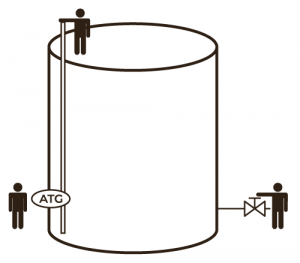
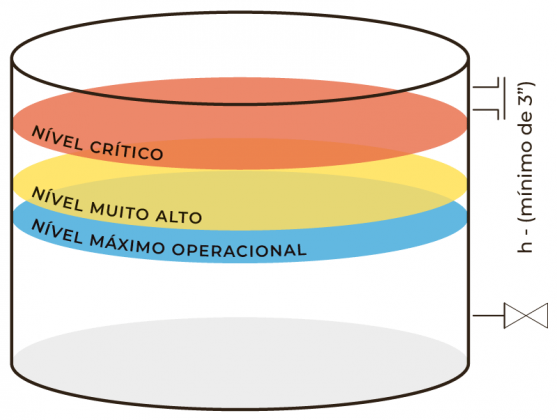
In API 2350, the levels of concern for the product inside the tank are defined. Are they:

The distance between the very high and critical level (h) must be calculated as a function of the action time for blocking the tank, before the product reaches the critical level. This distance should not be less than three inches.

The maximum operational level must be determined below and as close as possible to the very high level so that there is no loss of storage, however, external factors must be taken into account to avoid undue triggering of the very high level alarm, such as thermal expansion, turbulence and earthquakes.

API 2350 presents a method of protection against overflow using an AOPS (Automatic Overfill Prevention System), whose application can reduce the distance between the very high and critical level and, as a consequence, raise the height of the maximum operational level.

API 2350, up to its 3rd edition, recommended good practices for preventing overflow. In its 4th edition, API 2350 ceased to be a recommendation of good practices and became a standard.

In Brazil, API 2350 is a normative reference and is cited as an indispensable document for the application of the ABNT NBR 17505 standard, which specifies the requirements for the storage of combustible and flammable liquids, defined in ABNT NBR 17505-2:2015.

In addition to the ABNT standard, some units of the fire department, in the form of a Technical Instruction, which aims to establish the minimum requirements necessary for the preparation of a project and dimensioning of the fire safety measures required for production, storage, handling facilities and distribution of combustible and flammable liquids, signal the consultation to API 2350 regarding the means of preventing overfilling.

What is the impact for adequacy to API 2350?

When we deal with the subject, one of the first questions that the operation team asks is: to adapt to API 2350 will it be necessary to reduce the operational level of the tanks? And the answer is: it depends. The category to be applied for adequacy of API 2350 will depend on the existing instrumentation, operational procedures, process risk analysis, probability of failure on demand of instrumented systems, among other factors.

Once the category is defined, the terminal can decide to use a higher category, raising the maximum operational level of the tank, since the response time required for blocking the tank, in case of a very high alarm, will be reduced.

The opposite may also occur, and the maximum operating level must be reduced if the terminal is operating the tank in a category that is not compatible with the real response time for blocking the tank.

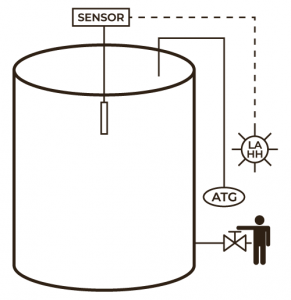
If the tank block response time is not calculated, API 2350 determines the minimum times by category as follows:

Category I – 45 minutes

Category II – 30 minutes

Category III – 15 minutes

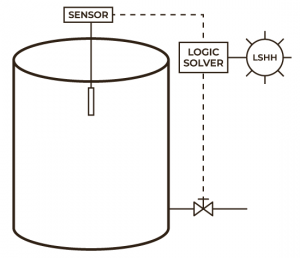
AOPS

The AOPS (Automatic Overfill Prevention Systems) is intended for use on tanks classified in any of the three categories. The advantage of AOPS is the ability to perform receiving interruption through a final element, for example the tank inlet valve, without human intervention. AOPS is composed of 3 components: sensor element, logic solver and final element. The high-high level sensor must initiate a safety function in the logic solver, which will trigger the closing of the final element, ie the tank inlet valve, thus stopping the rise of the tank level.

It is important to highlight that this closing of the valve must have its time calculated to avoid breaking the inlet connected to the product dispatcher.