How Bahiagás achieved precision and confidence to grow its natural gas network

Summary

Bahiagás, a natural gas distributor in Bahia, partnered with Automind to implement an integrated project for registering, modeling, and simulating natural gas distribution networks using Synergi Gas. The project, led by the Sense Metrics unit, produced up-to-date and reliable data, enabling accurate analysis, optimized planning, greater regulatory certainty, and clear expansion projections. The result is more efficient network management, with technology, governance, and data intelligence applied to one of the most strategic sectors of Brazil's energy infrastructure.

The challenge of an expanding network

Bahiagás has been responsible for distributing natural gas in Bahia for over 30 years. With long-term contracts and ongoing growth plans, the company is a key player in the state's energy development.

The network's rapid expansion required tools capable of providing up-to-date, reliable data to support strategic decisions, plan investments, and securely simulate future scenarios. It was time to invest in technology to further strengthen operations.

The partnership with Automind

It was in this context that Bahiagás approached us. The objective was clear: to implement an integrated project of registration, modeling, simulation, and training with Synergi Gas, one of the most globally recognized tools for managing natural gas networks.

Our first step was to import the company's entire GIS network into Synergi, aligning the data with the physical reality. Next, we registered customers in detail, which allowed us to simulate consumption scenarios across different segments.

With the modeling complete, we delivered an updated and dynamic model of the network. This opened the door for strategic analyses, such as predicting the impact of a power outage, projecting future demands, and more accurately evaluating expansions or maintenance.

The implementation process

To ensure the solution reflected the reality of the network and generated consistent results, Automind conducted a structured, phased implementation process.

The work began with validating the existing network, reviewing and confirming the integrity of the distribution network. Next, georeferenced shapefiles were generated with pipeline and customer information and imported into Synergi Gas.

Flow spreadsheets were consulted and cross-referenced with customer data to enable reliable simulations. We also performed a detailed analysis of as-builts, ensuring the correct registration of valves and infrastructure components. Finally, we consolidated the information into standardized reports, highlighting areas of concern and ensuring transparency at each stage.

This structured process gave solidity to the project and created the necessary foundation for the network's digital model to remain up-to-date and reliable.

The results: accuracy that builds confidence

Bahiagás' network is now kept up to date, providing accurate analysis and reliable information that facilitates strategic decision-making. The company can forecast demand, assess impacts in disruption situations, and act proactively in network management.

Planning has become more efficient, reducing the likelihood of unnecessary expenses and increasing the intelligent use of resources. With data aligned with regulatory requirements, the company operates with greater institutional security and strengthens its credibility in the market.

Furthermore, simulation capabilities allow for clear growth scenarios, giving Bahiagás the agility to expand its network intelligently and sustainably. The combination of technology and team training ensures these gains are lasting, consolidating a new level of efficiency for the company.

Sense Metrics experience applied to business.

The project was led by Sense Metrics, Automind's business unit dedicated to industrial data management. Formerly known as GEMED, Sense Metrics combines cutting-edge technology, proprietary methodologies, and over three decades of experience to transform technical information into strategic intelligence.

Its operations go far beyond data processing: Sense Metrics helps companies transform records, measurements, and operational histories into reliable decision-making scenarios, supporting both day-to-day efficiency and long-term vision. This expertise enabled the company to deliver an updated digital network to Bahiagás, capable of safely simulating different consumption and expansion scenarios. With solutions applied in critical sectors such as oil and gas, energy, petrochemicals, and fuels, Sense Metrics reinforces Automind's commitment to providing governance, accuracy, and reliability in every project.

A true milestone for the sector

The impact goes beyond technology. Bahiagás gained the confidence to grow in a planned manner, serve its customers more efficiently, and consolidate its position as a leader in natural gas distribution in Brazil. This project demonstrated that reliable information isn't just a technical detail. It's the foundation for smarter decisions, risk reduction, and sustainable growth.
Learn more about Sense Metrics solutions and discover how we're transforming distribution network management.

Origin Energy: How multimodal integration increased the efficiency of oil flow in Maceió

A strategic asset in the heart of the Northeast

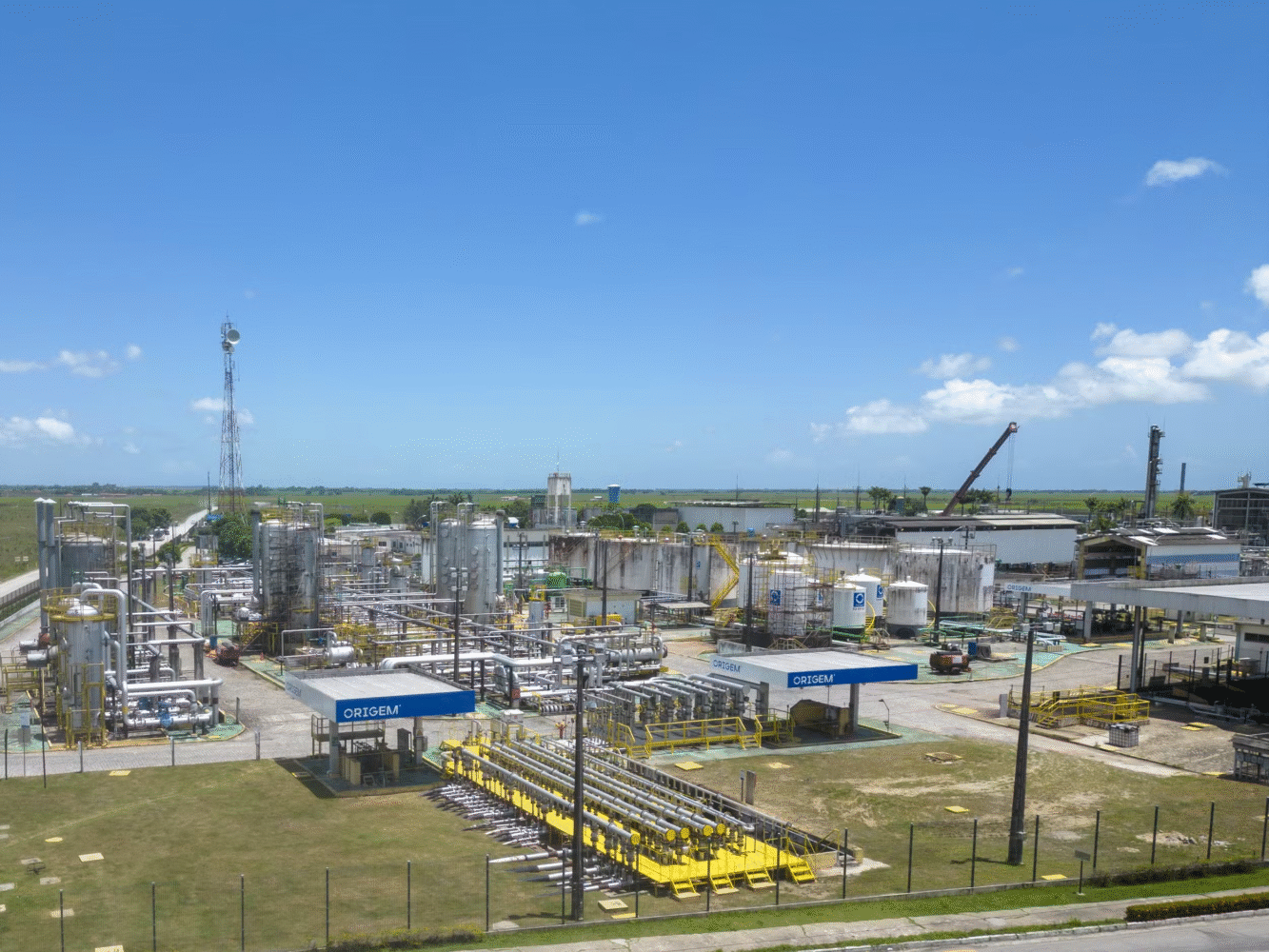
In 2025, Origem Energia took over management of the Maceió Waterway Terminal (TAMAC / area MAC11A), one of Brazil's most important oil logistics assets. Located in the Port of Maceió, in Alagoas, the terminal receives oil from the Pilar field, transported via the Pilar–Maceió pipeline (OPMAC), and transports this flow to ship loading.

With storage capacity distributed across ten tanks—five for crude oil and five for derivatives and ethanol—TAMAC serves as a strategic outflow point. In addition to being a storage facility, it serves as an integrated hub for road, pipeline, and maritime operations, all of which must operate in a synchronized and reliable manner.

The challenge: standardizing and integrating complex operations

Upon taking over the terminal, Origem Energia's mission was to structure processes that ensured efficiency and governance at every stage. This meant implementing mechanisms to ensure accurate measurements of oil and oil product volumes, reconciling inventories according to national and international standards, recording each movement in a traceable manner, and integrating reports and operational documents into a unified system.

Another key factor was keeping all information connected to the corporate ERP, providing real-time reports and dashboards to support quick and secure decisions. The goal was to transform the operation into a digital and agile environment, with complete reliability.

The solution: technology as an integrating link

To achieve this goal, Origem Energia implemented AutoLoad, an AutoMind solution focused on digitizing the liquid bulk logistics journey. The tool brought visibility, standardization, and intelligence to all TAMAC operations.

Each module played an essential role:

AutoLoad was also parameterized for crude oil handling, with automatic conversion calculations, application of BSW (Basic Sediment & Water), and water and sediment deductions in balances. This brought even greater reliability to the closing processes.

The results: efficiency, confidence and competitiveness

With the digitalization of TAMAC, Origem Energia reached a new level of operational integration.

Today, the terminal has:

This move strengthens Origem Energia's position as a benchmark in governance and efficiency in the sector, in addition to contributing to the advancement of fuel logistics in Brazil.

A milestone for national logistics

The partnership between Origem Energia and AutoMind reinforces the impact of digital transformation on critical infrastructure. AutoLoad has demonstrated its ability to integrate different modes, ensure metrological standards, and offer transparency to the logistics chain.

More than a successful initiative, the TAMAC project is consolidating itself as a milestone for the evolution of national liquid bulk logistics, combining efficiency, safety and governance to benefit the entire value chain.

Opla Advanced Logistics: Efficiency and Integration in the Logistics Heart of São Paulo

Imagine the following scenario

You're in the heart of Latin America's largest industrial hub, in Paulínia, São Paulo, where millions of liters of fuel flow daily through pipelines, rails, and highways. This is where Opla Logística Avançada has built something impressive—the largest independent ethanol terminal in Brazil.

Opla is no ordinary company, far from it. With the strategic partnership between BP and Ultracargo Logística, coupled with investments, it has become a national benchmark in multimodal liquid bulk operations. Its TCP (Paulínia Fuel Terminal) is a true powerhouse: 182.5 million liters of storage capacity for ethanol, diesel, biodiesel and aviation kerosene.

But even as a market leader, Opla faced a challenge common to many logistics giants: how to intelligently integrate three different modes (road, rail and pipeline) into a 24/7 operation?

The Moment of Transformation

It is in this scenario that AutoMind comes into play, with the AutoLoadIt wasn't just about implementing another system, but about revolutionizing the way one of the country's most strategic terminals operated.

The arrival of AutoLoad in Paulínia was poised to be a milestone. After all, we're talking about connecting refineries, pipelines, and rail lines to the national highway network, right at the epicenter of Brazilian fuel distribution.

The transformation came about through a solution that seemed simple in theory but was powerful in practice. AutoLoad was here to transform operations: its modules integrate the process from the terminal to the ERP—or, as we say in Opla's case, "from the instrument to SAP"—end-to-end, ensuring orchestrated, fluid, and perfectly synchronized performance.

THE Customer Portal gave carriers complete autonomy to schedule their operations without relying on phone calls or extensive email flows. Scheduling system began to distribute the operational windows intelligently, like a conductor organizing each entrance and exit.

THE Access Control brought automated security, while the Queue Control offered something every terminal dreams of: full visibility of what's happening in real time. No more wondering where each truck is or when the next train will arrive.

The Results Speak for Themselves

Each operation now has complete traceability, and process security has reached a new level. While the gatekeeping work, which was previously performed manually using spreadsheets, is now performed within the system, streamlining the team's work and increasing employee satisfaction. However, the impact goes far beyond the numbers. By implementing AutoLoad in Paulínia, OPLA not only modernized its terminal, it also implemented the growing digital transformation process in Brazil's liquid bulk sector. 

More than Technology, a Vision of the Future

This partnership between AutoMind and Opla represents something greater than a simple technological implementation. It's proof that when you combine the expertise of those who operate the largest independent ethanol terminal in the country with the innovation of those who develop the best logistics solutions, the result is transformative.

For AutoMind, having AutoLoad operating in Paulínia confirms that its technology is present at the most strategic points of Brazil's logistics infrastructure. For Opla, it ensures that its 182.5 million liters of capacity operate at maximum efficiency.

Ultimately, AutoLoad in Paulínia wasn't just an arrival, it was a quiet revolution that is redefining how Brazil moves its fuels.